Loading…
→ Back to home 🚗 Driving & transport
🚗 Driving & transportCycling Rules in Germany: Helmet Laws, Bike Paths, and Theft Prevention
2024-10-27
Learn Germany's cycling rules — helmet laws, alcohol limits, lights, bike path rights, and how to protect your bike from theft before you arrive.
Germany is one of the most bike-friendly countries in the world, but hopping on a bicycle without knowing the local rules can earn you a fine — or worse, get your bike stolen within a week. Whether you are planning to commute in Berlin, study in Munich, or explore Cologne on two wheels, understanding cycling rules in Germany, helmet laws, theft prevention, and road regulations will save you money and stress. This guide covers everything a newcomer from Morocco needs to know before pedalling out the door.
Are Helmets Mandatory in Germany? The Helmet Law Explained
This is the most common question — and the answer surprises many people. Helmets are not legally required for adult cyclists in Germany. There is no federal law forcing adults to wear one. You can ride through Hamburg or Stuttgart in a t-shirt and no helmet without breaking any rule.
That said, the official recommendation from the German Road Traffic Authority (Kraftfahrt-Bundesamt) and road safety organisations like the ADAC strongly encourages wearing a helmet. Statistics from the Statistisches Bundesamt (Federal Statistical Office) show that in 2022, roughly 400 cyclists died in traffic accidents in Germany, and a significant proportion involved head injuries.
What About Children?
Children under 14 are not legally required to wear helmets either, but virtually every German school, daycare, and cycling safety instructor strongly urges parents to put helmets on children. Many health insurance providers offer discounted or free children's helmets as part of their preventive health programmes (for example, TK — Techniker Krankenkasse — occasionally subsidises them).
Practical tip: Buy a helmet anyway. A decent one from Decathlon costs €25–€40. It protects your head and signals to German drivers and police that you are a responsible road user.
Cycling on Bike Paths: Rights and Obligations
Germany has over 70,000 km of dedicated cycling infrastructure. Knowing where you must ride — and where you can — is essential.
When You Must Use the Bike Path
Under the Straßenverkehrs-Ordnung (StVO), Germany's road traffic code, you are obligated to use a designated cycle path if it is marked with a blue circular sign showing a white bicycle (Zeichen 237 or 240). Riding on the road when a mandatory bike lane exists can result in a €20–€25 fine.
When You May Use the Road
If there is no mandatory cycling path, or if the path is marked with a supplementary sign saying "Radfahrer frei" (cyclists permitted but not required), you have the choice to use either the road or the path. Many experienced commuters prefer the road in cities like Frankfurt because contraflow bus lanes and parked cars make certain paths hazardous.
One-Way Street Exemptions
Here is something that confuses newcomers: cyclists are often allowed to ride against traffic on one-way streets. Look for a small supplementary sign beneath the one-way "Einbahnstraße" sign that shows a bicycle with the word "freigestellt" or a counter-arrow. This is common in residential neighbourhoods in cities like Leipzig and Freiburg. If no such sign exists, going the wrong way is illegal and carries a €20 fine.
Pedestrian Zones (Fußgängerzone)
Riding in pedestrian zones is forbidden unless a sign explicitly permits it. Where cycling is allowed, you must ride at walking pace (around 4–6 km/h) and give absolute priority to pedestrians. Children under 10 may always ride on pavements; children up to 8 must ride on the pavement.
Lights, Bells, and Equipment Rules
German law is very specific about what your bike must have. Riding without mandatory equipment is a fineable offence.
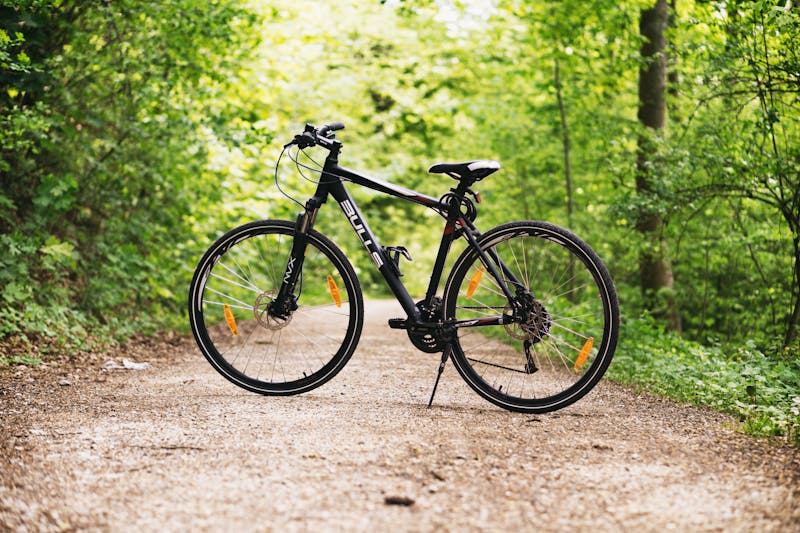
Required equipment under StVO:
- Front white light (must be mounted, not just clipped on in some states — check local rules)
- Rear red light (fixed or dynamo-powered)
- Front and rear reflectors (white front, red rear)
- Pedal reflectors (yellow/amber on both sides of each pedal)
- Spoke reflectors or reflective tyre sidewalls
- A working bell (Klingel) — fines of €15 for missing one
Riding at night without lights carries a fine of €25. If your lack of lights contributes to an accident, your insurance claim can be reduced significantly due to contributory negligence (Mitverschulden).
Practical tip: Get a dynamo wheel-powered lighting system if you plan to commute year-round. One-time cost of around €30–€60 at a bike shop like Fahrrad XXL or online at Bike24.de. Never worry about batteries again.
Alcohol Limit for Cyclists
You might assume the same 0.5‰ blood alcohol limit that applies to car drivers covers cyclists too. It does — but with an important nuance.
- 0.5‰ BAC: You can still receive a fine if your riding shows signs of impairment (swerving, unsafe behaviour).
- 1.6‰ BAC: At this level, cycling is treated as a serious traffic offence, equivalent to drunk driving. You can lose your car driving licence even though you were on a bike — yes, really. The legal basis is §316 StGB (criminal code). You may also be required to take an MPU (Medizinisch-Psychologische Untersuchung, or "idiot test") to keep your driving licence.
Fine amounts: Between €500 and €1,500 depending on BAC level and behaviour, plus potential criminal record entry. This is taken seriously in Germany. If you go out in Düsseldorf's Altstadt and have a few beers, walk your bike home or take the U-Bahn.
How to Register Your Bike Against Theft in Germany
Germany has a serious bicycle theft problem. According to the Bundeskriminalamt, over 300,000 bikes are stolen each year, and only about 10% are ever recovered. The main reason so few are recovered is that owners cannot prove the bike is theirs.
Frame Number and the BikeRegister / ADFC Registration
Every bike has a unique Rahmennummer (frame number), usually stamped under the bottom bracket (where the pedals attach) or on the head tube. Write it down the moment you buy a bike.
You can register your bike in several free and paid national databases:
- Fahrradpass app (by ADAC) — free, stores photos and frame number
- National Bike Register via 529 Garage — used by many German police departments
- ADFC (Allgemeiner Deutscher Fahrrad-Club) — Germany's largest cycling association offers a registration service to members; membership costs around €48/year and includes third-party liability insurance
Police Registration Events (Fahrradcodierung)
Many German police stations and municipalities offer Fahrradcodierung — a free service where they engrave or stamp a unique code (often your postal code + a personal identifier) into your frame. This makes the bike traceable and acts as a powerful deterrent to theft. Check your local Polizeipräsidium website (e.g., polizei.de for your city) for upcoming events.
Locks and Insurance
- Spend at least €50–€80 on a lock. Brands like Abus (Granit series) and Kryptonite are trusted.
- Always use two locks of different types (U-lock + chain or folding lock).
- Lock the frame and the rear wheel to a fixed object — not just the wheel.
- Consider adding your bike to your Hausrat (household contents) insurance. Many German insurers cover bike theft for an extra €3–€8/month.
What People Get Wrong About Cycling Rules in Germany
- "I don't need lights because I have reflectors." Wrong. Reflectors are required in addition to lights, not instead of them. You need both.
- "Riding on the pavement is fine." No — adults cycling on pavements face fines of up to €55.
- "My Moroccan driving licence means I understand the rules." Traffic signs and cycling-specific regulations differ significantly from Morocco. Re-read the StVO bike sections.
- "A cheap €10 padlock is enough." Thieves in German cities carry tools. A cable lock is cut in seconds. Invest in a proper lock.
- "I can ride in pedestrian zones as long as I'm careful." Unless a sign explicitly permits it, this is illegal regardless of how careful you are.
- "Losing my car licence for cycling drunk can't be real." It absolutely is. Multiple court rulings confirm this.
Conclusion
Cycling in Germany is genuinely enjoyable — the infrastructure is excellent, distances are manageable, and it saves you money on public transport. But the rules are enforced, the fines are real, and bike theft is a genuine risk. Wear a helmet (even if not legally required), fit proper lights, register your frame number the day you buy the bike, and never cycle after heavy drinking.
If you are still in the process of preparing your move to Germany — drafting application letters, understanding your rights, or learning the language — you do not have to do it alone. Book a consultation with our specialist and start building your future in Germany with expert support at every step.
Frequently asked questions
Share with your friends
Was this article helpful?